
To the Heart Of the Matter
Collusion against nuclear power defies reason
Life is impossible without energy. Without it, civilization is not possible. Mankind has obtained energy in various ways in the past. In the sweat of their brow, humans have learned to procure food and have managed to domesticate animals, channel water, harness fire, and harness the wind. However, only the discovery of electricity and the use of nuclear power can be regarded as the breakthrough victory of human wit and reason over nature, which brought about an almost inexhaustible universal energy source. The thrilling story of the taming of the atom is part of history, but, as it happens, no human achievement ultimately grows to the sky. Human stupidity may be bigger than the universe...

Nuclear power. Words that evoke research, progress and hope, but also respect, terror and fear. Humanity, through its ingenuity, its perfect organization and its maturity, has mastered the deepest forces of the universe. On the one hand, therefore, it has at its disposal an arsenal of power so devastating that a world war could mean the utter destruction of civilization, humanity, and perhaps even life itself. But it has also acquired a reliable and stable source of energy that does not depend on the burning of vast quantities of fuel such as coal, oil or gas, and the pollution that accompanies it, nor on unpredictable weather such as that of windmills or solar panels. While the dangers of using nuclear weapons are still great, the story of the use of tamed nuclear power has gradually begun to stall for reasons that have nothing to do with physics or engineering. Perhaps it is part of the order of the world that humans can never achieve a permanent peace and every rise is followed by a fall, and so we pluck the fruit from the tree of knowledge again and again, reaping the bad with the good. So I guess it makes sense that in the very countries that were most instrumental in developing the science and technology needed to harness nuclear power, people eventually decided to throw it all away and go back centuries. Let's first look at one meeting between two brilliant physicists that took place some 100 years ago, when Werner Heisenberg, who was only in his early twenties at the time, met Albert Einstein, twice his age, and the young scientist boldly decided to defy authority and his role model.
Relative uncertainity
Werner Heisenberg was already in his teenage years a very talented mathematician, physicist, but also an athlete, writer and teacher. At grammar school he was completely captivated by Albert Einstein's book The Theory of Relativity, which gave him a completely new perspective on our world and on how limited our sensory perception is and how naive our ideas about the universe and its laws are. Time, space and matter suddenly appeared in a whole new light. When he was about to go to a lecture by his idol, Albert Einstein, he was shocked. As soon as he entered the packed hall, he was handed a pamphlet signed by the Nobel Prize-winning physicist Lenard and eighteen other leading German physicists, who accused Einstein of spreading unscientific nonsense hostile to the German spirit, which was only being fanned by the Jewish press. So taken aback was he that he did not even notice that Einstein himself, fearing for his safety, did not even attend the lecture and was replaced by his courageous friend Max von Laue, who fought against the attempt to label Einstein's theories as "Jewish physics", claiming that science had neither race nor religion and that he had never been intimidated or seduced by the then ruling National Socialist ideology, Nazism. He is said to have dealt with this by preferring to wear packets under his arm so that he would not have to raise his right arm in the street to the Nazi salute. But the fact is that many of the outstanding physicists who were behind the fundamental discoveries of nuclear and quantum physics were also passionate adherents of completely different and sometimes completely hostile ideologies, often convinced Zionists, Nazis and Communists. Real science does not really distinguish between ideologies or races. It is based on an exact discipline and studies the world, come what may.
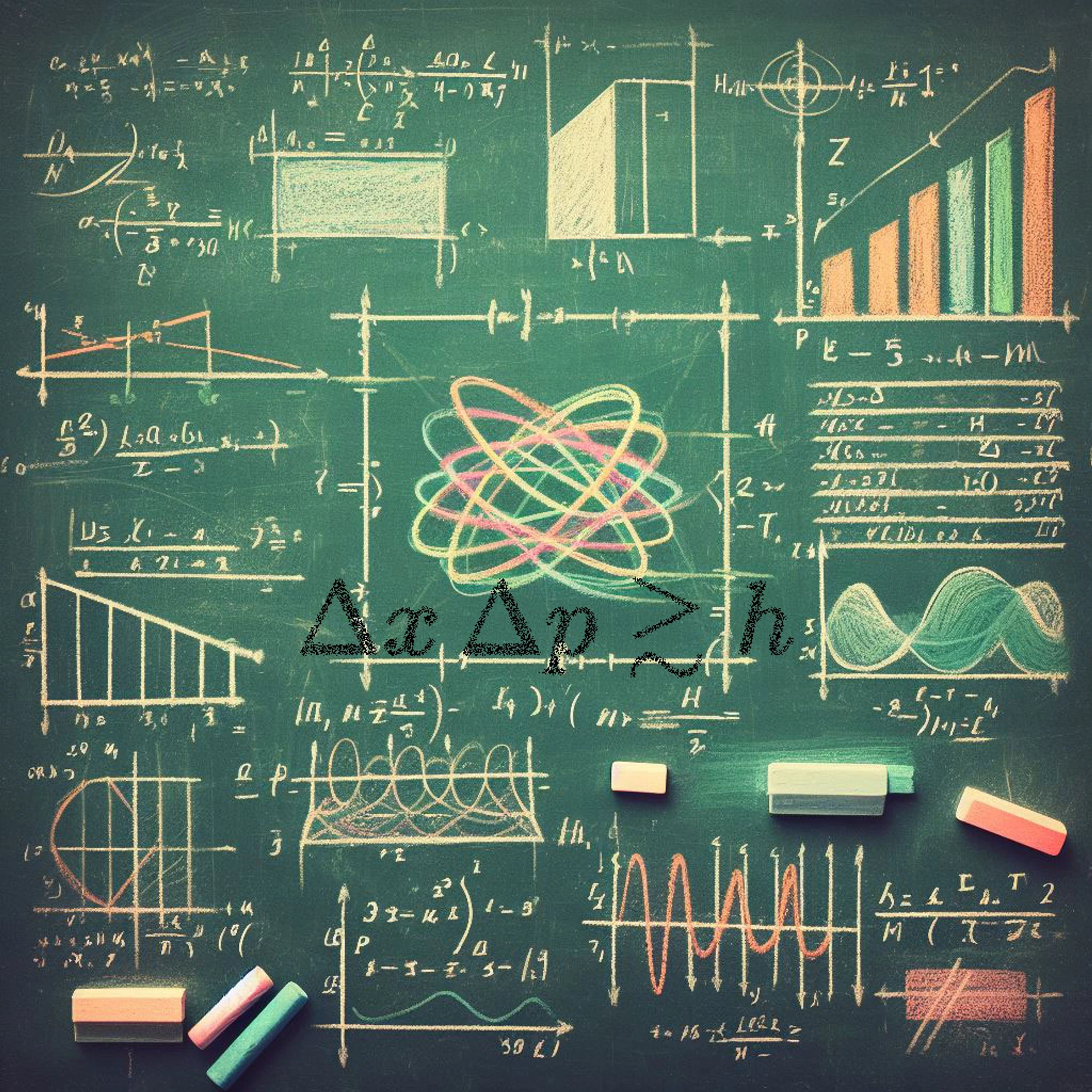
In the midst of the politically turbulent period between the two brutal wars, there were equally heated battles and debates in the field of physics. The scientific authority and world star Einstein defended positions that many physicists began to feel were wrong. They confronted him with new and even bolder theories, which were mainly held by Niels Bohr and just Heisenberg. What must it have been like for Einstein, who had just won the Nobel Prize for Physics, and Heisenberg to walk together through the university town of Göttingen and argue heatedly about the new concept of quantum physics, which Einstein had completely rejected? What must have been the feelings of a young man who defied his much more famous role model and authority and defended his point of view and his scientific theories? It's hard to say, but we do know that despite fundamental disagreements they remained friends and time eventually proved one of them right (no, it wasn't really Einstein). In 1932, Heisenberg was also awarded the Nobel Prize for his theory of quantum physics.
But far more savage was another of Heisenberg's scientific disputes, which is said to have ended in the public physical assault of his rival Schrödinger. We don't know whether the two remained friends, but more likely not. But what is certain is that their seemingly irreconcilable and mutually contradictory theories eventually both made sense at the same time, however wrong Schrödinger was on many points, as another outstanding physicist, Dirac, soon proved. Perhaps for other mortals who are not exactly blessed with the genius of these physical giants, there is a lesson in their fates. All our knowledge is limited. Learning about the world is a never-ending adventure that transcends not only one human lifetime, but is a process that will not end as long as history lasts. Therefore, those who proclaim their end or claim that science has already known and described all the secrets of the universe will be misled again and again. And those who, in the name of their own single truth, prevent others from freely exploring, doubting, seeking and finding, will always be considered fools in the end.
The genius taming of atoms
The history of nuclear energy is fascinating and full of many other important discoveries. Several shelves of exciting books could be written about it. The last few centuries have been particularly busy in this regard. Uranium was discovered in 1789 by the German chemist Martin Klaproth. Ionizing radiation was discovered by Wilhelm Röntgen in 1895. Radioactivity was discovered by Pierre and Marie Curie in 1896. Ernest Rutherford showed that radioactivity results from the emission of alpha or beta particles from the nucleus, resulting in the formation of another element. James Chadwick discovered the neutron in 1932. Enrico Fermi conducted a series of experiments with the nuclear fission reaction before its official discovery. Otto Hahn and Fritz Strassmann conducted experiments that led to the discovery of the nuclear fission reaction. Lise Meitner and Otto Robert Frisch theoretically explained the nuclear fission reaction process. In 1943, Julius Robert Oppenheimer was appointed director of the Los Alamos Laboratory in New Mexico, which was tasked with developing the first nuclear weapons.
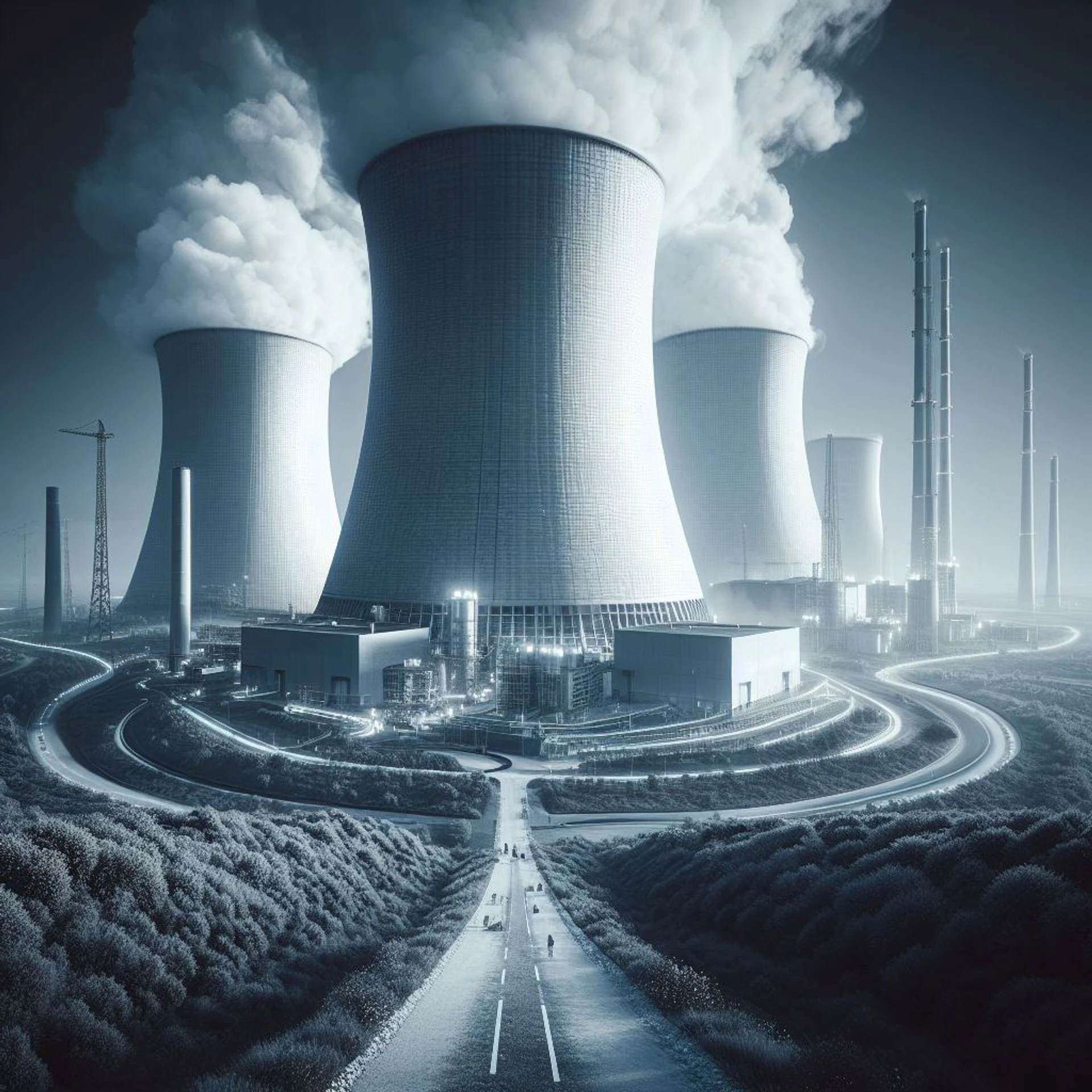
On 16 July 1945, the first test of the Trinity atomic bomb was then carried out, and in August 1945, the atomic bombs were used for the first and last time in the war in the bombing of Hiroshima and Nagasaki. From 1945 onwards, attention was also focused on harnessing nuclear energy to power naval ships and, above all, to generate electricity. Since the middle of the twentieth century, various nuclear reactors capable of reliably producing electricity have been in operation. Their benefits to society are undeniable - they minimise harmful emissions, provide a reliable supply of electricity and are at the forefront of innovation. If anyone really wants to achieve real energy sustainability and protect our environment, nuclear power is a key technology for a good future for our civilisation and planet.
But the very European states and nations that have been at the forefront of these discoveries have begun to behave like a confused little child who has trampled on his most precious toy in a tantrum, at a time when they are continuing their holy war against carbon dioxide in the name of protecting our planet Earth from the potential threat of harmful gases from combustion. However, the consequence of this campaign so far has been rather a poorer population and a shift of energy-intensive production to other continents, because Europe is running out of energy. It is already half dependent on energy imports from abroad, and the efforts to develop the use of solar energy suffer from several flaws. The biggest is that 9 out of 10 solar panels installed in Europe are imported from China. The International Energy Agency reports that around 90 per cent of production capacity for key technologies in all clean energy is concentrated in China and other countries in South East Asia, and in photovoltaics China controls almost the entire production chain from silicon wafers to finished panels and batteries. For wind power components, Europe holds a more significant share of global production, although China dominates here as well. The EU is similarly dependent on imports of raw materials and their semi-finished products used in batteries, such as lithium and cobalt. It is remarkable and downright hypocritical, moreover, that the production of carbon-neutral energy and transport technologies is very energy-intensive, and in China, the main source of electricity so far is coal combustion, and a full 70% of electricity is produced by burning fossil fuels. However, their lifespan is by no means indefinite and one can worry about what will happen to these highly toxic products once they reach the end of their useful life. This will only happen within fifteen years for batteries and perhaps thirty years for solar panels, but only time will tell. In the meantime, energy prices in the European Union are reaching heights that put local businesses in a position where they cannot compete with their Asian and American rivals. Our whole economic area is therefore experiencing an unusually sharp drop in performance, which has so far been covered up by accelerating money creation (i.e. debt) and selling overpriced goods and services to each other. And when even that is not enough, subsidies come in. While these do not represent any new value, they can distort the true state of individual companies and entire sectors of the economy, and can also skilfully hide the true environmental costs of certain products. It is still true that not only time but also energy is money.
So while the green movement in Germany and Austria dreams of a clean world, they are dependent on electricity imports from their less conscious neighbours such as the Czech Republic and Poland. But even the Czechs have already set targets that will mean that by the end of this decade they will not export electricity but will need to import it. It's just that no one knows where from. And so hypocrisy, inaction, stupidity and cunning have become the watchwords of the age. Meanwhile, the years go by, and while governments and the corporations and activist organisations connected to them repeat the appealing slogans about how the world will be beautiful, sustainable, green, everyone will be happy and everyone will be equal, the collision with reality is inevitable. Half a century ago, things looked very different and the whole of Europe could have lived with plenty of electricity and a much smaller carbon footprint. So what has happened?
Revolt of the Fools
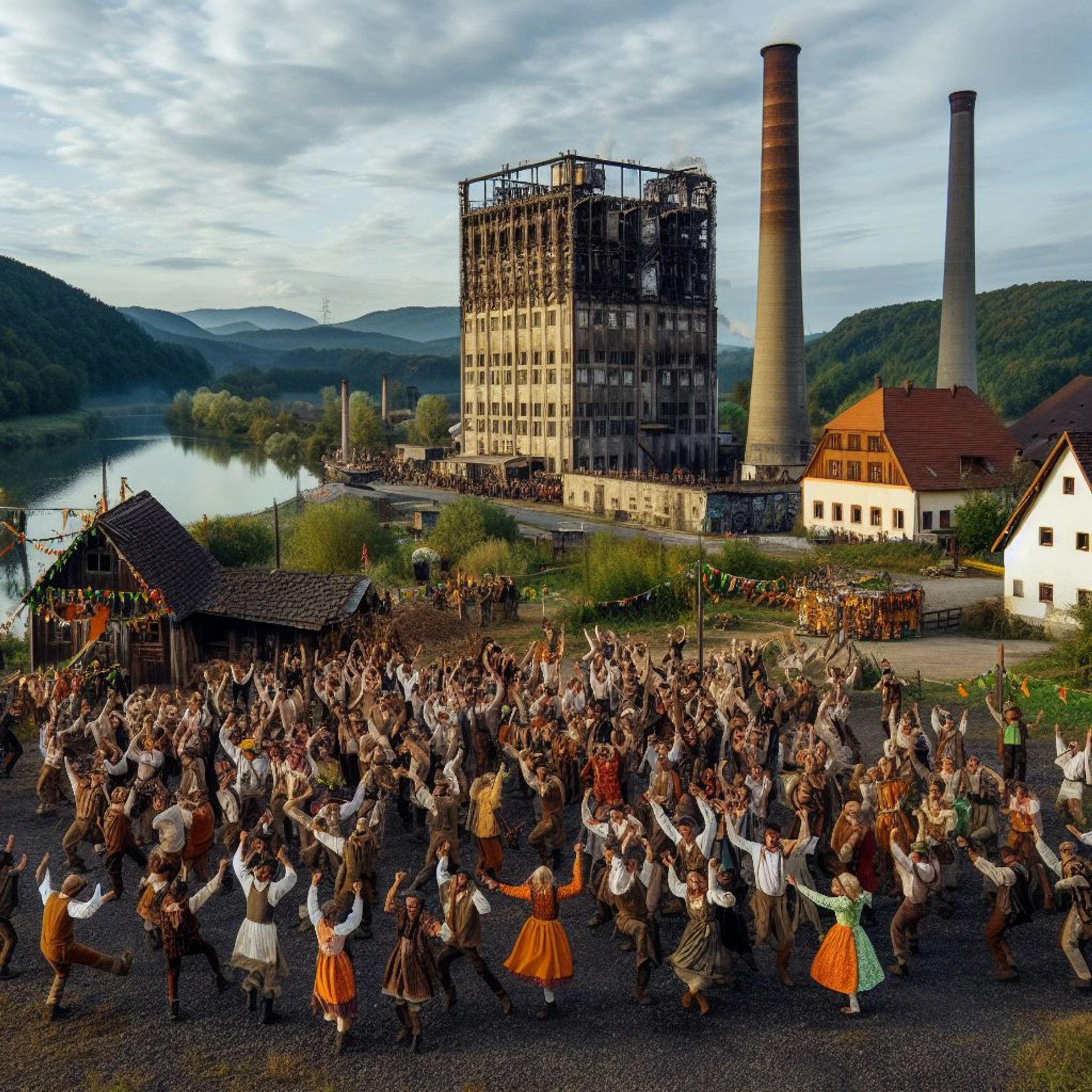
Zwentendorf on the Danube. The picturesque town in Austria, with less than 5,000 inhabitants, has inadvertently played a major role in the development of Western civilisation. It has made history in Austrian politics, energy and the world's green socialist movement. Austria had great plans for a major development of nuclear power, which was to cover a substantial part of their consumption, and started the construction of the first such plant in 1972 in Zwentendorf, together with a major information campaign to promote the benefits of nuclear power to the Austrian population. Construction progressed well and everything was on track for the plant's start-up in 1976. Yes, it took almost five (!) years to build a nuclear power plant back then. Progress simply cannot be stopped. But as it happens, the worst tragedies often start innocently and subtly. Many books have long since been published in Austria and around the world, and films have been made that have introduced the idea of the destructive power and danger of nuclear power into the public consciousness. This was, after all, a logical and justified reaction to the threatening use of nuclear weapons. There was also one such author living in Austria itself who took up the subject. This was the Prague-born Günther Schwab, an active Nazi since 1930 and a member of the NSDAP and their SA militia, obsessed with ecology and other Nazi ideals of purity and health. He was also the editor of the ecological magazine Lebenschutz and a Nazi expert on ecology, eugenics and behavioral research. He continued this work after the war, publishing more ecological books and warning of the collapse of nature and humanity. The culmination of his efforts was the founding of a major international movement, Weltbund zum Schutz des Lebens (Protectio Vitae), aimed at protecting the environment and opposing nuclear power. His determination and perseverance are undeniable.
The anti-nuclear movement then rapidly gained momentum in Austria and included many scientists, writers and doctors. Prominent figures included the physician Rudolf Drobil and the biologist Gertrude Pleskot, who demanded in a memorandum supported by the Lower Austrian Medical Chamber that the construction of the nuclear power plant be stopped because of its health risks and meagre economic benefits. A certain Walther Soyka also appeared on the scene. No one believed that this activist, who followed in the footsteps of his father and whose main goal was a healthy lifestyle and abstinence (he probably did not continue to promote the ideas of eugenics and racial purity after the war), could succeed. His efforts to involve the people in the vicinity of the planned power plant were successful, almost none of the locals wanted a nuclear power plant in their backyards, indeed any power plant, but the laws of the time gave them no opportunity to influence the construction. The petition then gathered over a hundred thousand signatures, but even that was not enough to stop the construction. However, it was enough to attract media attention, the launch of the plant was postponed and eventually the Austrian government decided to call a national referendum in 1978. Moreover, the Social Democratic Chancellor Bruno Kreisky linked the result of the referendum on the launch of the nuclear power plant to his remaining in office, which turned out to be a doubly false solution.
In a referendum that also became a referendum on a purely political issue, the opponents of the commissioning won by the narrowest margin of less than thirty thousand votes (50.47% for : 49.53% against) out of two thirds of the eligible voters. This plant, which cost more than 25 billion crowns to build, has never been commissioned and is a silent reminder of things past, a monument to human folly and error. Today, solar cells are installed on its roof, which generate 180 MWh of electricity in a whole year. That's the amount this completed nuclear power station would produce in a quarter of an hour! This plant was later replaced by a power plant burning Czech and Polish coal and later Russian gas. And Chancellor Kreisky? He remained in office happily until 1983.
Ideology thus triumphed over physics and industry, and the green movement became a powerful phenomenon in much of the affluent West. A similar fate to that which befell the nuclear power stations in Austria has befallen those in Germany and threatens to do so in other countries. Moreover, this revolutionary movement has gradually shifted its focus to an uncompromising fight against carbon dioxide emissions. It succeeded elegantly in providing a unifying and easily grasped ideology that helped anchor the hitherto fragmented leftist groups that drew on the traditions of socialism and managed to bring an appealing combination of fear and the possibility of achieving feelings of satisfaction in the public display of virtue and shared conviction. Any mass ideology that is to be truly successful creates its own system similar to a religious one. It gives people lofty goals that transcend them, establishes rituals, and has its saints and martyrs. This allows it to flexibly overcome even contradictions that would otherwise make common sense a problem. So one can simultaneously fight at any cost to reduce carbon dioxide emissions and shut down functioning nuclear power plants.
But the lessons of history are chilling. If Hitler saw in red socialism, in white nationalism, and in the swastika the mission of the struggle for the victory of Aryan man, modern progressive socialism kept the red and added the green, as a symbol of the international struggle to save the planet. Instead of the swastika, then, it has a rainbow flag with a black and brown wedge to symbolise the struggle for the rights of all kinds of minorities, whether real or imaginary, and turns Nazi racism inside out towards self-hatred and the induction of guilt and false sympathy in those who belong to the ordinary domestic population. In addition to green ideology, the concept of all-encompassing multiculturalism and a confused view of human sexuality is then inculcated in everyone from an early age. This ideology has become dominant in the vast majority of Western Europe. Even in Central Europe, for which the experience of the Red Experiment is still quite fresh, it has been on the rise in the last decade with generous support from the West. Sometimes you only have to go so far to one side until you find yourself back at exactly what you were running away from. Progressive socialism also, unlike Bolshevik Marxism, relies on cooperation with private property instead of its destruction. In this too it resembles Nazism and Fascism, where the state was also closely linked to big business. This model led to the strengthening of monopolies and the liquidation of small and medium-sized enterprises. Another similarity can be seen in the cult of health and the desire for a sterile environment. What both totalitarian ideologies of the twentieth century have in common is a disrespect for human life. Indeed, euthanasia, eugenics and fanatical environmentalism directed against the human person itself are nothing new. Surely one can turn a blind eye to this ideology. It looks inconspicuous and, like all its predecessors, hides under the guise of a universal and unquestionable good. But for those who have not closed their eyes, it is becoming difficult not to see how it has permeated the West and how quickly it is spreading in Central Europe. Thus, there is a growing number of those who reject this ideology as a threat to people and society as a whole. A threat that stands consciously and openly against the foundations on which this Western civilisation was built.
The future ain't what it used to be
Meanwhile, Western civilization is heading towards, at best, many decades of decline and, at worst, its demise, as some civilizations before it have. Or it may leave Europe forever and remain alive in some form on other continents. All of this may take a long time, but it may also take place precipitously. Either way, it should be worth saving and restoring. Its very emphasis on individual rights, its limitations on violence as a common means of interpersonal interaction, its advances in science, technology and art make it hardly replaceable in today's world. It has a rich cultural and religious tradition, which includes literature, music and philosophy, and inspires all other civilisations of the world. At the same time, it was itself the result of the fusion of two very powerful civilisations: European and Jewish. On the one hand, then, are the strong reason and rational scientific inquiry that we have seen grow in ancient Greece and Rome. And on the other side is also a strong story of faith, which is especially the story of the Jews and, since the time of Jesus, also of the Christians.
But can the current ruling elites change this course? Hardly. They would have to want to and be able to. The lower decks may be leaking a bit, but at the top it is still possible to believe that things will somehow fix themselves. There's a worse possible explanation: the information age has brought society to the brink of collapse, bringing to the forefront those who are only the least obnoxious and good looking. The clearer one's attitude or the more forceful one's approach, the more resistance one will arouse, especially among those who are comfortable with the current system. In such a case, it would be almost certain that the present ruling class would not support any change, but would go the way of the status quo, and the cleverest would suggest the possibility of rebuilding or slight progress within the limits of the law. So nothing substantial will change on its own. There will continue to be nonsensical socialist programmes that hide behind appealing slogans such as the 2030 Agenda and its Sustainable Development Goals, of which there are 17 in total - all of which are, of course, excellent, universally and planet-wide good and also progressive - ESG, or criteria for environmentally and socially conscious corporate governance, and more and more initiatives and programmes, which, among other things, employ millions of civil servants and consultants, and which make it possible to hold almost any number of different conventions and conferences at which the chosen ones assure each other that we remain united and unwavering in our quest for the most brilliant tomorrows. This new ruling class, a veritable progressive oligarchy, shares its values, language and culture, and has successfully dominated most political parties that have a shot at a share of power. Some might suggest that one reason for this may be that members of this class find it difficult to make it in the competitive world of work and business and so must seek employment in the sphere of the state and its paid organisations. Thus far, attempts by other ideological currents to change this trend have not been very successful. But perhaps this is also because they lack background, resources and, above all, a clearly formulated common goal, and the state administration, education and NGOs are already permeated by the ideology of progressivism. An example of this is the situation in the Czech Republic, where Prime Minister Fiala, who passionately rejected progressive socialism for a long time, is at the head of a government which is now actively promoting this progressive direction and is a firm part of the modern European international.
The chain reaction
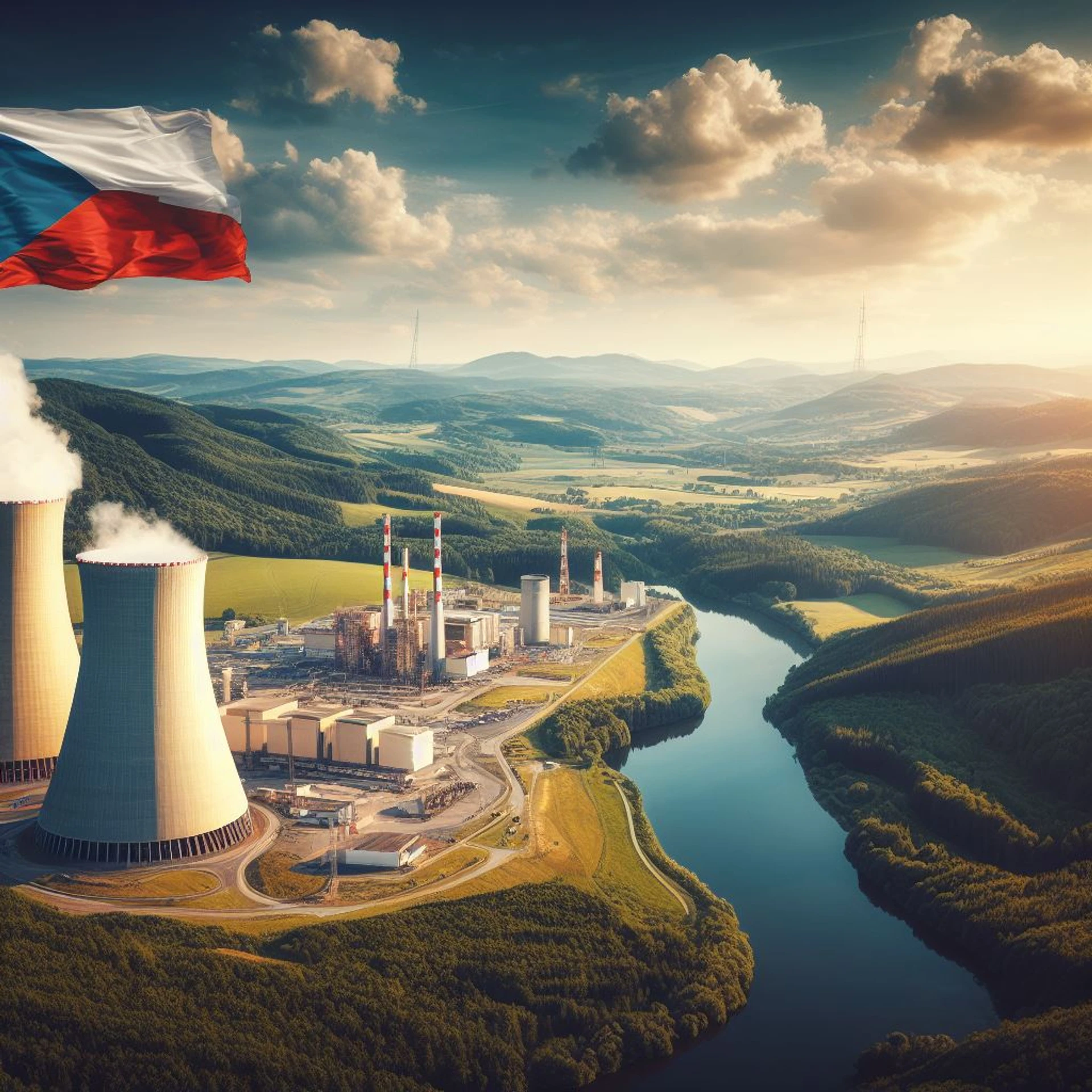
The latest government and EU plans for the Czech Republic envisage that we will fundamentally change our energy sector by 2030. So we are probably in for a rather wild green five-year period, which will tell us a lot about how feasible these plans are. However, everyone should ask themselves whether they share the enthusiasm of the ideologues of green transformation and whether they really want to sacrifice their still fairly prosperous and happy lives on the altar of these prophets' chosen good.
The green-red ideological battle is now centred on carbon dioxide, in addition to the unceasing cultural revolution. In doing so, it is using even more advanced methods than those with which it managed to completely destroy nuclear power in Austria and Germany. Their ideology of combating the climate, including the means they have chosen, now seems to be an unassailable dogma. However, it is essential to ask whether these goals and efforts are really worthwhile in relation to the costs involved. If nothing else, we should at least remember that it is vitally important for us to preserve nuclear power as the mainstay of the Czech energy sector, because for various reasons we can also speak of a lost decade in this respect. Fortunately, there is a broad consensus on nuclear energy in the Czech Republic so far, which is not at all self-evident, and at least on paper the Czech state will support nuclear energy. But the Euroelites do not share this enthusiasm and it seems that the coming generation of local young politicians will already be much more conforming to the mainstream European political current, which is revolutionary and seeks to change humanity and re-educate man from a position of central control. If someone does not like this direction of Europe and the Czech Republic, and if they want to clearly reject progressive socialist ideology, then perhaps the upcoming European elections offer the closest chance to start a chain reaction that can reverse the process of decline. Given the usually low turnout and the rather symbolic importance of these elections, there seems to be no better opportunity to try to change course by electing new courageous parties and people who are not afraid to confront this threat.